

Losing a tooth changes more than your smile. It can change how you chew, how you speak, and how you feel about laughing in photos or meeting someone new. Sometimes the loss is sudden, from an injury or a cracked molar. Sometimes it builds slowly through years of gum disease or decay. Either way, we understand how much a missing tooth can weigh on daily life. At Elite Dentistry, we have spent a decade caring for families in Addison and the west suburbs, and replacing missing teeth is some of the most meaningful work we do.
For many patients, dental implants are the closest thing to getting a natural tooth back. A bridge depends on neighboring teeth, and a traditional denture rests on the gums. An implant does neither. It anchors directly into the jawbone the way a tooth root does, which gives it the stability to support everything from one crown to a complete set of teeth. On this page, we explain how implants work, which options we offer, what treatment looks like in our office, and what Addison residents should know before deciding. Our goal is to answer your questions honestly so you can walk into your consultation already understanding your choices.

What Dental Implants Are and How They Work
A dental implant is a small, biocompatible post, usually made of titanium. It is placed in the jawbone where a tooth root used to be. Titanium is the same family of material used in hip and knee replacements because the body accepts it well. Over the months after placement, the surrounding bone grows against the implant surface and locks it in place. This process is called osseointegration. Once it is complete, the implant becomes a stable foundation that can handle the everyday forces of biting and chewing.
A complete implant tooth has three parts. The implant post sits below the gumline in the bone. An abutment connects that post to the visible tooth. The restoration on top is a crown, bridge, or denture that we custom design to match the shape and shade of your surrounding teeth. Because the post sits in the bone, it gives the jaw the kind of stimulation it would normally get from a natural root. That matters more than most people realize.
Why Replacing a Missing Tooth Sooner Matters
When a tooth is lost and not replaced, the jawbone in that area slowly starts to shrink because it no longer receives stimulation. The teeth next to the gap can drift or tip into the empty space, and the opposing tooth may begin to extend out of its socket. Over time, these small changes can alter your bite, create spaces where food gets trapped, and make the area harder to clean. Patients who have been missing several teeth for years often notice changes in their facial contours as well, especially around the lips and cheeks.
Replacing a tooth with an implant helps preserve the bone and keeps neighboring teeth where they belong. A traditional bridge requires us to file down the healthy teeth on either side of the gap to hold crowns. An implant stands on its own and leaves those teeth untouched. Timing also plays a role. The longer a site goes without a tooth, the more bone may be lost. That can mean additional procedures, such as bone grafting, before an implant can be placed. If you have recently had a tooth extracted or know a tooth needs to come out, talk with us early so we can plan with the implant in mind.
Implant Options We Offer at Elite Dentistry
Tooth loss looks different for everyone. A college student who chipped a front tooth playing basketball at Addison Trail High School needs a very different plan than a grandparent who has worn a loose lower denture for fifteen years. That is why we offer several implant-based solutions and match each one to the patient’s needs:
For full arch cases, many patients can leave with a set of attractive temporary teeth soon after their implants are placed. The permanent arch follows once the implants have fully integrated with the bone. Patients who come to us after years of struggling with slipping dentures often tell us this is the part of treatment that changes their daily routine the most.
Are You a Good Candidate for Dental Implants?
Most adults who are missing one or more teeth can be considered for implants. Every case still needs a careful evaluation first. The most important factors are the amount and quality of bone in the jaw, the health of the gums, and your overall medical health. Patients with active periodontal disease usually need that infection treated before implants can be placed, because healthy gums are essential to long-term success. Our office is one of the few in the region offering LANAP® laser gum treatment, which allows us to address gum disease with a less invasive approach before moving forward with implants.
Certain health conditions and habits can affect healing and must be discussed openly. These include uncontrolled diabetes, smoking, some medications that affect bone, and a history of radiation therapy to the head or neck. None of these automatically rules a person out. They simply mean we may need to coordinate with your physician, adjust the treatment plan, or set expectations differently. If bone has been lost after an extraction or because of gum disease, a bone graft can often rebuild enough support to place an implant safely.
We build every treatment plan around your medical and dental history, current oral health, cosmetic goals, lifestyle, and budget. The only way to know whether implants are right for you is a consultation and proper imaging. We are glad to give you an honest answer, even if that answer is that another option, such as a bridge or denture, would serve you better.

What the Implant Process Looks Like at Our Addison Office
Your treatment begins with a consultation. We talk through your goals, review your health history, and examine your teeth and gums. We use CBCT (cone beam computed tomography) to capture a three-dimensional view of your jaw. This shows us the height and width of the bone, the location of nerves and sinuses, and the best position and angle for each implant. Digital radiography and our intraoral camera add detail, and the camera lets you see exactly what we see on the screen. When we need impressions, our digital scanning technology replaces the messy trays many patients remember from years ago.
From there, we create a written treatment plan that outlines each phase, the expected timeline, and the estimated cost. If you need an extraction or bone graft, we explain how that fits into the sequence and how it affects healing time.
Implant placement is typically a minor outpatient procedure. Before your appointment, we review local anesthesia and sedation options so you know what to expect and can choose the level of comfort that works for you. Patients who choose IV sedation need to arrive with an empty stomach and have someone drive them home. Most remember little or nothing about the procedure afterward. We also give you detailed written instructions for before and after surgery, and our team stays available if questions come up while you heal.
After placement, the implant needs time to bond with the bone, usually a few months. Some cases allow a same-day temporary crown or bridge. Others are better served by waiting until healing is complete. Once the implant is stable, we attach the abutment and place your final restoration, checking the fit, bite, and appearance so the new tooth blends naturally with the rest of your smile.
Comfort, Communication, and a Relaxing Visit
We know many people put off implant treatment because they are nervous about surgery. We take that seriously. Beyond sedation options, we designed our office to feel calm and welcoming, with massage chairs and complimentary coffee in the waiting area. For parents who need to bring little ones along, we have a children’s play area.
Clear communication is just as important as comfort. Addison is one of the most diverse communities in DuPage County, and we are proud that our team speaks English, Spanish, Arabic, and Persian. Being able to discuss a surgical procedure, aftercare, and financial details in your preferred language makes a real difference. It helps patients and family members feel confident they understand every part of the plan.
Caring for Your Implants Through Every Season
Implants cannot decay the way natural teeth can, but the gums and bone around them still need care. Brush twice a day, clean between teeth daily with floss or a water flosser, and keep up with regular checkups and cleanings. These habits protect the tissue that holds your implant in place. Inflammation around an implant, called peri-implantitis, can develop if plaque is left to build up. Routine visits let us catch it early.
Life in northern Illinois brings a few seasonal considerations. Long winters often mean more hot coffee, more holiday treats, and more time indoors snacking. Those habits are worth balancing with good hygiene. If you play hockey or basketball in local leagues or skate at nearby rinks during the winter, ask us about a custom sports mouthguard to protect both your implant restoration and your natural teeth. If you clench or grind your teeth at night, a custom night guard helps protect your crowns from excessive wear. With good daily care and professional maintenance, implants can serve you well for many years.
Making Implant Treatment More Affordable
Cost is one of the first questions patients ask, and we believe in being upfront about it. The investment depends on how many teeth are being replaced, the type of restoration, and whether extractions or bone grafting are needed. That is why we provide a personalized written estimate after your consultation instead of quoting a single price that may not reflect your situation.
Dental insurance does not always cover implants, though some plans contribute toward part of treatment, and medical insurance may apply in certain cases. Our office accepts most PPO plans and Medicare plans. Our team will help you understand your benefits before treatment begins. For patients without insurance, our Elite Membership program offers an annual plan that includes a discount on most services. We also offer special pricing on implant consultations from time to time, so ask our front desk about current offers when you call.
Serving Addison and the Surrounding DuPage County Communities
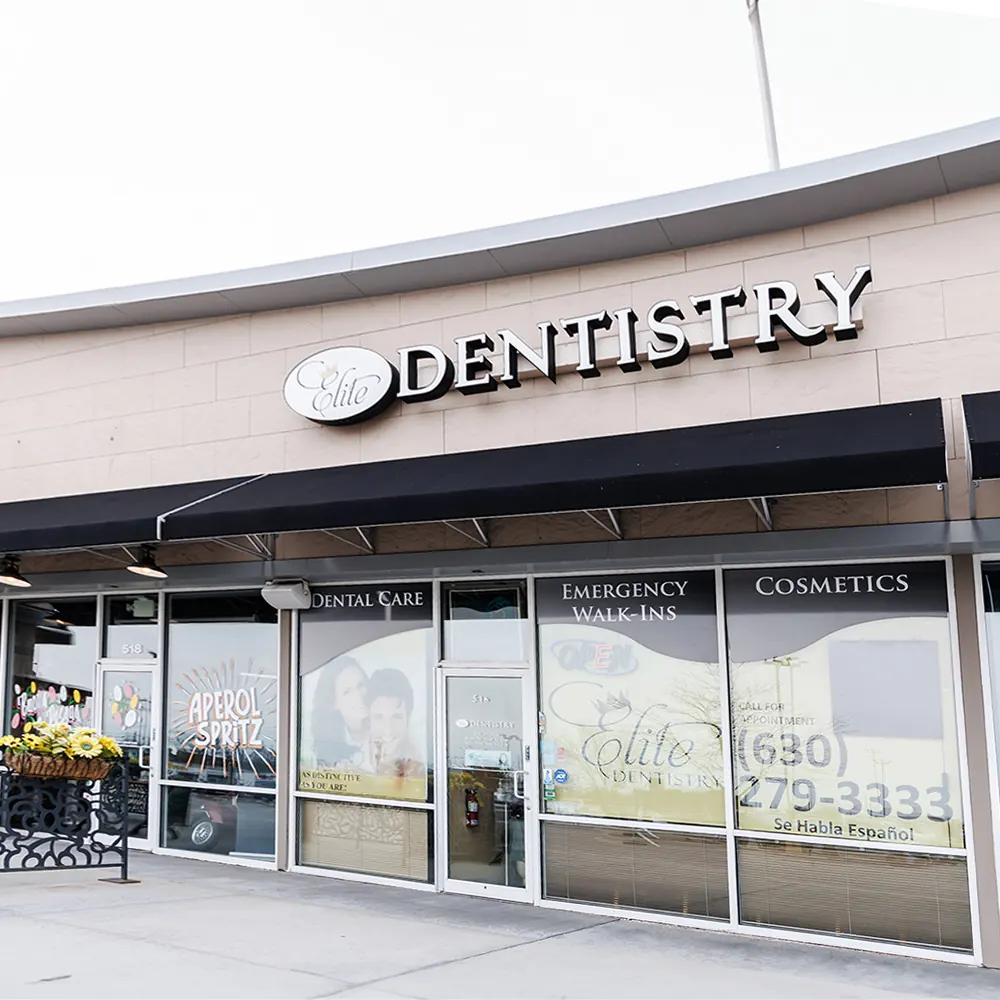
Our office at 516 West Lake Street sits along one of Addison’s busiest corridors. That makes us easy to reach whether you live near the Addison Public Library, close to the Salt Creek greenways, or in the neighborhoods off Army Trail Road. Many of our implant patients also come from nearby Wood Dale, Bensenville, Itasca, Villa Park, Lombard, Glendale Heights, Bloomingdale, and Elmhurst. Interstate 290 and Interstate 355 are close by, so the drive from elsewhere in DuPage County is usually quick.
Implant treatment involves several visits over a few months, so convenience matters. We offer appointments Monday through Friday and on Saturday mornings. That flexibility helps commuters, shift workers, and parents who cannot easily step away during the week. Having your consultation, imaging, placement, and final restoration coordinated under one roof also means fewer trips across town and a care team that knows your case from start to finish.
Experienced, Caring Leadership
Elite Dentistry is led by Dr. Mohamed Waheed, a graduate of the University of Illinois College of Dentistry at Chicago. He is a member of the American Dental Association, the Illinois State Dental Society, and the Chicago Dental Society. Dr. Waheed has made continuing education a priority throughout his career so he can offer patients current techniques in implant, restorative, and cosmetic dentistry. He practices alongside Dr. Nisreen Al Farra and a dedicated team who share his commitment to gentle, personalized care.

Other Dental Services We Offer
Implants are often one part of a larger plan to restore oral health, so it helps to have a full range of care available in the same office. In addition to implant dentistry, we provide:
Take the First Step Toward a Complete Smile
Whether you are missing one tooth or living with a denture that never quite feels secure, you have more options today than ever before. Implants can restore your ability to eat the foods you enjoy, speak clearly, and smile without hesitation. They also protect the long-term health of your jaw and remaining teeth. If you have been searching for dental implants in Addison, we invite you to visit our office on West Lake Street for a thorough consultation. We will take the time to understand your goals, show you your 3D images, explain every option clearly, and build a plan that fits your health, your schedule, and your budget. Call our new patient line at (630) 278-4272 to schedule your visit. We look forward to helping you rebuild a smile you feel proud to share.


If you've lost a tooth due to injury, decay, gum disease, or any other reason, we recommend dental implants to replace missing teeth. Dental implants come the closest to replicating the look, feel, and function of your natural teeth.
Dental implants are placed into the jawbone and mirror the same function as the root of a tooth. The procedure for dental implants is usually performed while a patient is sedated. Patients who undergo IV sedation must have an empty stomach and transportation home following the procedure. Most sedation patients will have little to no memory of the procedure occurring.
Generally, dental implants are made out of a biocompatible metal such as titanium. Biocompatible metals are also used for other common bone implants (such as shoulder, hip, and knee replacements). The visible portion of the implant is usually made out of porcelain and is custom-made to match your existing teeth.
Dental implants are designed to fuse to the bone, which makes them become permanent fixtures. Typically speaking, the success rate is nearly 100%. There are few cases in which the implant will not fuse as intended and must be removed. If this happens to occur, the procedure can be attempted again a few months later.
Dental implants are not usually covered by dental insurance, but may be covered under a patient's medical insurance. Our office and your insurance company can discuss coverage options with you based on your individual case and treatment plan.
It's easy... just take care of an implant as if it's a natural tooth! This involves regular brushing, flossing, and dental checkups. If you have any concerns about your implant, contact us immediately.
Ready to schedule your next dental appointment or have questions about our services?
Contacting Elite Dentistry is easy! Our friendly staff is available to assist you with scheduling appointments, answering inquiries about treatment options, and addressing any concerns you may have. Whether you prefer to give us a call or fill out our convenient online contact form, we're here to help. Don't wait to take the first step towards achieving the smile of your dreams – reach out to us today and discover the difference personalized dental care can make.
